The right dose leaves you clearer, not shaken.
On the first minuteLast month I asked you to soften. This month I am asking you to gather.
It may seem strange to follow an issue on heat with one on cold, as if we were turning from one thing to its opposite. We are not. Heat and cold are not opposites in the body. They are two halves of one conversation. Heat taught us to expand; cold teaches us to contract, to collect ourselves, to return to center. The nervous system learns its range in the space between the two.
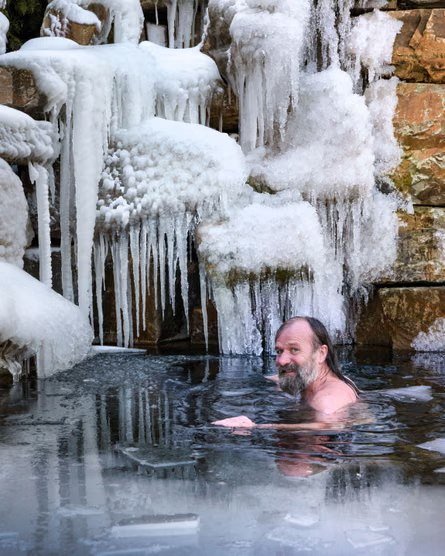
The first time you step into truly cold water, every instinct says leave. The breath catches. The heart races. For a long minute there is room for nothing else. Then something shifts. The breath returns, slower now, and the mind goes very quiet and very clear.
That first minute is the whole lesson, and it is the part that deserves the most respect. Cold is powerful, and for women in our second chapter its power cuts both ways. Much of the research is young, and many of the most quoted studies were done on young men. So in these pages I grade the evidence plainly: what is established, what is emerging, and what is still a wait. And I tell you exactly where the risks are.
Inside: the cold truth; a morning ritual that begins in your own shower rather than an ice hole; the plunge I would bring home, and the one I would build a garden around; what cold can and cannot do for your skin; and the women and men who stepped into icy water long before anyone measured their norepinephrine.
Begin gently. Nothing in these pages needs to be proved in a single morning.
The body holds the work. These are the tools that hold the body.
Researchers at University College London surveyed women who swim in cold water. Beyond the anxiety figure above, perimenopausal swimmers reported easing of mood swings (34.5%), low mood (31.1%) and hot flushes (30.3%), and many swam specifically for that relief.
What it means · Encouraging, and self-reported by women who already love to swim. Community and open water are part of the effect.
Pound et al., Post Reprod Health 2024Copenhagen researchers studied men who winter-swim two to three times a week, alternating cold dips with sauna. In the cold, they showed greater increases in cold-induced thermogenesis, the heat the body makes to stay warm, than non-swimmers.
What it means · A real metabolic signal, measured in young men. Page 4 asks what it might mean for women.
Søberg et al., Cell Rep Med 2021Pooling 3,177 adults, the review found stress was lower 12 hours after cold immersion, with improvements in sleep quality and quality of life, but no effect on mood.
What it means · Real, modest and time-dependent: the benefits showed up hours later, not in the water.
Cain et al., PLoS One 2025In the Netherlands, 3,018 adults finished their usual hot shower with 30, 60 or 90 seconds of cold for 30 days. Self-reported sickness absence fell, though the number of days they felt ill did not change.
What it means · The beginner's dose. You do not need an ice bath to start, and 30 seconds counted as much as 90.
Buijze et al., PLoS One 2016A review of the thermal environment and sleep found that, with ordinary bedding, heat increases wakefulness and reduces slow-wave and REM sleep. Thermoregulation and the mechanisms of sleep are closely linked.
What it means · On a warm night, your bedroom temperature may matter more than anything in your supplement drawer.
Okamoto-Mizuno & Mizuno, J Physiol Anthropol 2012· Pound M, Massey H, Roseneil S, et al. How do women feel cold water swimming affects their menstrual and perimenopausal symptoms? Post Reprod Health. 2024;30(1):11–27. doi:10.1177/20533691241227100 · Søberg S, Löfgren J, Philipsen FE, et al. Altered brown fat thermoregulation and enhanced cold-induced thermogenesis in young, healthy, winter-swimming men. Cell Rep Med. 2021;2(10):100408. doi:10.1016/j.xcrm.2021.100408
· Cain T, Brinsley J, Bennett H, et al. Effects of cold-water immersion on health and wellbeing: a systematic review and meta-analysis. PLoS One. 2025;20(1):e0317615. doi:10.1371/journal.pone.0317615 · Buijze GA, Sierevelt IN, van der Heijden BC, et al. The effect of cold showering on health and work: a randomized controlled trial. PLoS One. 2016;11(9):e0161749. doi:10.1371/journal.pone.0161749 · Okamoto-Mizuno K, Mizuno K. Effects of thermal environment on sleep and circadian rhythm. J Physiol Anthropol. 2012;31:14. doi:10.1186/1880-6805-31-14
Cold is the most dramatic of our five pillars, and the easiest to oversell. Step into cold water and the body answers in seconds: the skin's blood vessels clamp down, breathing quickens, the heart speeds, and the nervous system floods the blood with signaling chemistry. Some of what follows is well measured. Some of it is promising. Some of it is still a story told on social media. Here is the difference.
The most quoted numbers in cold-water culture come from a single Czech study published in 2000. Šrámek and colleagues immersed young men to the neck in water at 32°C, 20°C and 14°C for an hour. At 14°C, alongside the rises above, metabolic rate climbed by 350%. Noradrenaline is the body's alertness and focus signal, which helps explain the bright, awake feeling after a plunge.
Two honest caveats. The participants were men, and nobody sits in a home plunge for an hour. Shorter dips produce smaller responses, and we do not yet know the dose curve for women.
Brown adipose tissue burns energy to make heat. In a landmark review of PET-CT scans from 1,972 adults, active brown fat turned up more than twice as often in women as in men, and less often with age and higher body weight (Cypess, 2009). Whether cold practice can preserve it, or turn it into meaningful metabolic change for women in midlife, is not known.
In a 2023 brain-imaging study, a single five-minute head-out immersion left volunteers feeling more alert, attentive and inspired, and less distressed and nervous, with measurable changes in how large brain networks interact (Yankouskaya, 2023). One session, small numbers: a mechanism worth watching, not proof.
Cold raises inflammatory markers briefly, immediately and an hour after immersion. That is an acute stress response, the same family of signal that exercise sends. Can training reshape that response? The Wim Hof studies on page 7 ask exactly that.
· Šrámek P, Šimečková M, Janský L, et al. Human physiological responses to immersion into water of different temperatures. Eur J Appl Physiol. 2000;81(5):436–442. doi:10.1007/s004210050065 · Tipton MJ, Collier N, Massey H, et al. Cold water immersion: kill or cure? Exp Physiol. 2017;102(11):1335–1355. doi:10.1113/EP086283
· Cypess AM, Lehman S, Williams G, et al. Identification and importance of brown adipose tissue in adult humans. N Engl J Med. 2009;360(15):1509–1517. doi:10.1056/NEJMoa0810780 · Yankouskaya A, Williamson R, Stacey C, et al. Short-term head-out whole-body cold-water immersion facilitates positive affect. Biology (Basel). 2023;12(2):211. doi:10.3390/biology12020211
The most consistently measured response in this field, and its main danger. Every line in the safety box below exists because of it.
Tipton et al., Exp Physiol 2017Graded strong for the direction of the effect, which is not in doubt. Not for its size in a two-minute home dip.
Šrámek et al., Eur J Appl Physiol 2000Heat under ordinary bedding fragments sleep. The cheapest cold practice in this issue is a thermostat.
Okamoto-Mizuno & Mizuno 2012Pooled trials, but small ones, with benefits measured over hours rather than months.
Cain et al., PLoS One 2025One large survey and no trial yet: promising, and without a comparison group.
Pound et al., Post Reprod Health 2024A clear signal in young men; what brown fat means for women is on page 4.
Søberg et al., Cell Rep Med 2021Graded emerging because the trials carry a high risk of bias. The detail is in the box below.
Bieuzen et al., PLoS One 2013No trial yet shows that cold practice means fewer infections in daily life.
Cain 2025 · Buijze 2016No human data link cold exposure to a longer life. For skin claims, see page 11.
Tipton et al. 2017 (review)A thermogenic signal is not a weight-loss result. There are no trials showing meaningful fat loss in women.
Søberg 2021 (mechanism only)In the one trial in women with depressive symptoms, cold showers with breathing did no better than warm. Cold is not a substitute for care.
Blades et al. 2024 (page 7)The Nordic practice is not cold alone. It is the sauna, then the plunge, then rest, with the timings on page 8. Søberg's winter swimmers did exactly that. A review of 18 trials found alternating hot and cold water eased muscle soreness and strength loss after exercise better than passive rest, although no better than other recovery methods, and the trials were at high risk of bias (Bieuzen, 2013).
The rhythm itself is the practice: expand, contract, return. Begin with the heat you already know, and let the cold be brief. Planning both at home? Read Choosing a Home Sauna, with a sauna-and-plunge edit.
· Shattock MJ, Tipton MJ. 'Autonomic conflict': a different way to die during cold water immersion? J Physiol. 2012;590(14):3219–3230. doi:10.1113/jphysiol.2012.229864 · Bieuzen F, Bleakley CM, Costello JT. Contrast water therapy and exercise induced muscle damage: a systematic review and meta-analysis. PLoS One. 2013;8(4):e62356. doi:10.1371/journal.pone.0062356 · Espeland D, de Weerd L, Mercer JB. Health effects of voluntary exposure to cold water: a continuing subject of debate. Int J Circumpolar Health. 2022;81(1). Other sources on pages 3–4.
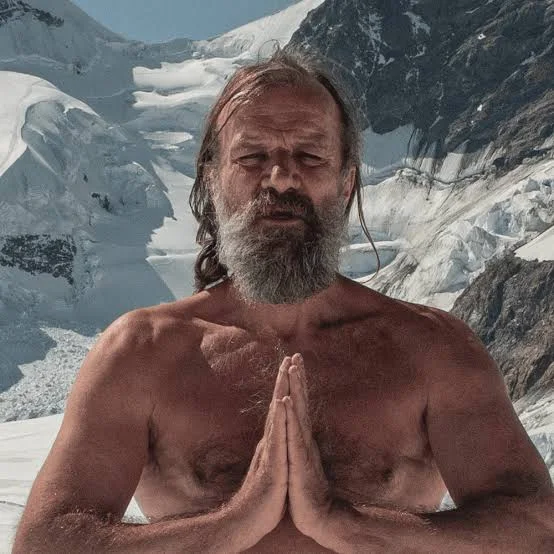
Hands together, before the ice that taught him.
Image: Wim Hof MethodEach issue, one person who has lived the pillar in full. For cold, there was only ever one name.
Born in the Netherlands in 1959, Wim Hof began testing himself against the cold as a teenager, sitting in snow for hours and sleeping outdoors through winter. After the loss of his wife, he returned to icy water again and again, and found there a way through grief. From that private practice came a public one, and a name: The Iceman.
What he built is the Wim Hof Method, three pillars practised together: a breathing technique, gradual cold exposure, and commitment, the steady attention that holds the other two in place. Its central claim is a structural one. The nervous system that runs breath, heart and temperature is more trainable than we were taught.
That claim brought him into the laboratory, which few figures in wellness ever invite. Researchers at Radboud University Medical Centre in the Netherlands trained volunteers in his method and measured their blood; others scanned his brain as his body cooled. Their findings, and their limits, are overleaf.
The Trove lives on one idea: the mind and the body are not two rooms but one house. Dr. Joe Dispenza works that territory from the inside, through intention and meditation. Wim Hof works it from the outside, through breath and ice. What makes him rare is that he walked into the laboratory and let scientists measure the bridge.
I do not ask you to sit in ice for two hours. I ask you to notice what he showed is possible: that attention can change how the body meets stress. Start with the breath and a cold shower. The record books can wait.
FoundHealthy young Dutch men trained for ten days in the method, then received a bacterial toxin that briefly mimics infection. The trained group released more adrenaline and more of the calming signal IL-10, less TNF-α, IL-6 and IL-8, and reported fewer flu-like symptoms.
The limitTwelve per group, men only, one laboratory model. A trainable response, not proof of fewer colds.
Kox et al., PNAS 2014FoundScanned at 57 while cooled and rewarmed, his practice engaged the periaqueductal gray, a brainstem hub that modulates pain and cold, and the insula, linked to self-awareness and attention. His forceful breathing made the muscles between his ribs burn more glucose, making heat. His brown fat was unremarkable.
The limitOne man and a few controls. A map, not a rule.
Muzik et al., NeuroImage 2018FoundStressed midlife women practised fifteen minutes a day for three weeks: the method's breathing with cold showers, or slow breathing with warm showers. Both groups improved equally in mood, anxiety and stress scores, and kept the gains at three months. The method group ruminated less after hard days.
The limitNo group did nothing, so time and expectation may explain part of it. All six dropouts were in the method group.
Blades et al., Compr Psychoneuroendocrinol 2024FoundEvery eligible trial to mid-2022, weighed together. The steadiest signal was in the inflammatory response, through the adrenaline pathway seen in 2014. Effects on exercise were mixed.
The limitEight small trials, mostly young adults. Promising, not established.
Almahayni & Hammond, PLoS One 2024
Image: Wim Hof MethodGo deeperThe Trove may earn a commission through these links, at no extra cost to you.
· Kox M, van Eijk LT, Zwaag J, et al. Voluntary activation of the sympathetic nervous system and attenuation of the innate immune response in humans. Proc Natl Acad Sci USA. 2014;111(20):7379–7384. doi:10.1073/pnas.1322174111 · Muzik O, Reilly KT, Diwadkar VA. “Brain over body”: a study on the willful regulation of autonomic function during cold exposure. NeuroImage. 2018;172:632–641. doi:10.1016/j.neuroimage.2018.01.067
· Blades R, Mendes WB, Don BP, et al. A randomized controlled clinical trial of a Wim Hof Method intervention in women with high depressive symptoms. Compr Psychoneuroendocrinol. 2024;20:100272. doi:10.1016/j.cpnec.2024.100272 · Almahayni O, Hammond L. Does the Wim Hof Method have a beneficial impact on physiological and psychological outcomes in healthy and non-healthy participants? A systematic review. PLoS One. 2024;19(3):e0286933. doi:10.1371/journal.pone.0286933
The goal is not endurance. It is the moment when the gasp gives way to a long, steady breath. That is the skill: staying calm while the body is alarmed. Practice it in small doses and the alarm grows quieter each time. Written for healthy adults, as a place to start.
Before the water, take two inhales through the nose and one long exhale through the mouth. Repeat three times.
Feet, legs, hips, then shoulders last. Keep your face out of the water and breathe out as you lower in.
At a temperature you can breathe through, around 10–15°C (50–59°F) to begin. Let the first minute pass.
Dry off, dress warmly and move: a slow walk, a warm drink. Skip a scalding shower straight after.
How do you feel ten minutes later? One sentence a day becomes your own evidence, and your guide to dose.
Move to the next stage when the current one feels calm, not when the calendar says so.
No purchase needed. A warm robe and a water thermometer are the only extras worth having.
The no-plumbing step up from the shower, compared on page 10.
See The Cold Edit →Cold on demand: our Pick, and a rival worth comparing.
See The Trove Pick →
Plunge is the category leader in home cold plunges. The tubs chill and filter their own water, so there are no bags of ice and no weekly refill, and the temperature is waiting when you are. That removes the two reasons most cold practices stop: effort and inconsistency. Researched, not personally tested: that is what Editor's Pick means here.
The woman who has finished her shower progression, wants one to three minutes of cold several mornings a week, and has a garage, terrace or covered corner with power nearby.
Cost per use. Take an illustrative $6,000 tub, used four times a week for ten years: 2,080 sessions, about $2.88 each, plus electricity and filters. Check current pricing for your model.
Ask about a trial or return window, and who services the chiller in your area. Before you buy, compare:
For the woman with land and a long view: a garden sauna house paired with its own plunge, so the full Nordic round happens a few steps from the door. From about $29,700 to $55,200, before groundwork and any permit. Explore Sweaty Yeti →
· Barwood MJ et al. Eur J Appl Physiol. 2013;113(3):681–689. doi:10.1007/s00421-012-2473-y. Five 7-minute immersions at 15°C blunted the cold-shock response; anxiety brought it back. The case for a plunge used calmly and often.
Affiliate disclosure: The Trove earns a commission on qualifying purchases. How we choose: every product we feature has been researched, not personally tested. We feature only products in categories with credible published research behind them, from makers who share real specifications, and we tell you where the evidence is strong and where it is still thin. That research describes the practice or the technology; it does not mean a specific product has been clinically proven unless we say so and cite the study.
Links marked "Explore" may earn The Trove a commission. It never changes what we recommend. Prices are approximate; check current pricing.
A second chilled-plunge maker worth comparing with our Pick, for the woman who wants options on size, finish and price. Worth knowing: compare chiller range, filtration and warranty side by side.
Explore Polar Monkeys →An upright, insulated tub you fill with cold water and ice. The honest first step between the shower and a chilled plunge. Worth knowing: you manage the ice and the water changes yourself.
Explore Ice Barrel →The estate alternate to our Pick, page 9. Worth knowing: ask whether the plunge in a pairing is chilled or filled by hand.
Explore Sweaty Yeti →A cover that cools or warms each side of the bed through the night. Useful when you sleep hot and your partner does not. Worth knowing: product data is mostly company-run.
Explore Eight Sleep →Creapure creatine monohydrate, NSF Certified for Sport and Informed Sport tested. For the strength training that makes the rest of the practice possible. See page 12.
Explore Momentous →Hydrolyzed collagen peptides from several sources, studied as a class for skin hydration and elasticity. See page 11 for the honest grade.
Explore Ancient Nutrition →Medik8, Allies of Skin and The Ordinary each make a GHK-Cu serum: a lawful cosmetic for visibly firmer-looking skin. Worth knowing: use it in a separate step from strong acids or vitamin C.
Explore the serums →Biofeedback for the minutes after a plunge, while the heart is still settling: you watch its rhythm steady on screen as your breath slows. About $159–$199.
Explore Inner Balance →
Cold narrows the small blood vessels in the skin. That is why an ice roller or a splash of cold water makes the face look less puffy in the morning: less fluid, a little more definition, a fresh flush as the blood returns. It is real, it is pleasant, and it is temporary. The effect lasts as long as your coffee.
Cold water and wind can leave the face tight and dry. Pat rather than rub, and moisturize while the skin is still damp.
The bigger story is hormonal. In a classic study, skin collagen in untreated postmenopausal women declined with years since menopause, not with chronological age (Brincat, 1985). Sun and heat thin the barrier further. The work is protection, hydration and support from within.
"Cryo for collagen." Facials and devices sold on the promise that cold rebuilds collagen or reverses aging rest on no human evidence we could find. The cold is lovely. The claim is not supported. Spend there for the experience, never for the promise.
GHK-Cu is studied for skin firmness and repair, mostly in the lab, with small human studies (Pickart & Margolina, 2018). Patch-test first, and start on alternate nights. Topical only: injectable peptides are a different, unapproved story.
Explore the serums →The 2021 meta-analysis found better hydration, elasticity and wrinkles with collagen peptides (de Miranda, 2021). Much of the research is industry-funded. We like Ancient Nutrition Multi Collagen.
Explore Ancient Nutrition →After cleansing, press a cool, damp cloth or a chilled roller to the face for a minute, moving outward from the center. Then serum, moisturizer, sunscreen. A ritual for morning puffiness, not a treatment.
It is real, it is pleasant, and it is temporary.What cold does for the face
· Brincat M, Moniz CJ, Studd JW, et al. Long-term effects of the menopause and sex hormones on skin thickness. Br J Obstet Gynaecol. 1985;92(3):256–259. doi:10.1111/j.1471-0528.1985.tb01091.x · de Miranda RB, Weimer P, Rossi RC. Effects of hydrolyzed collagen supplementation on skin aging: a systematic review and meta-analysis. Int J Dermatol. 2021;60(12):1449–1461. doi:10.1111/ijd.15518 · Pickart L, Margolina A. Regenerative and protective actions of the GHK-Cu peptide in the light of the new gene data. Int J Mol Sci. 2018;19(7):1987. doi:10.3390/ijms19071987
Muscle is the quiet currency of the second chapter, and estrogen's decline makes it harder to keep. Creatine helps muscles regenerate energy during hard effort, which is why it has been studied for decades in athletes. The question was always whether it helps women after menopause.
A 2026 meta-analysis of seven randomized trials and 608 postmenopausal women, mean age about 62, gave a clear answer with a clear condition. Creatine at 5 grams a day or more, combined with resistance training, produced small but meaningful gains: about 0.37 kg more lean mass and 7.5 kg more on the leg press than placebo. Low doses without training showed nothing. Kidney markers were unchanged (Naddafha et al., 2026).
In one year-long trial, creatine with training slowed bone loss at the hip, −1.2% against −3.9% on placebo (Chilibeck, 2015), though the meta-analysis found no overall change in bone density. For the mind, a 2024 meta-analysis of 16 trials found improved memory, with moderate certainty (Xu, 2024).
The message: creatine supports training. It does not replace it. Choose plain creatine monohydrate, the form used in nearly all of the research.
with resistance training two to three times a week
Our pick · Editor's PickCreapure monohydrate. NSF Certified for Sport and Informed Sport tested. About $40–$43 for 90 servings; check current pricing.
Explore Momentous →Evidence: Moderate (strength, with training) · Emerging (memory)
These statements have not been evaluated by the Food and Drug Administration. This product is not intended to diagnose, treat, cure, or prevent any disease. Ask your clinician before starting creatine if you have kidney disease. Sources: Naddafha S, Antonio J, Kreider RB, Stout JR. J Int Soc Sports Nutr. 2026;23(1):2668435, doi:10.1080/15502783.2026.2668435 · Chilibeck PD, et al. Med Sci Sports Exerc. 2015;47(8):1587–1595, doi:10.1249/MSS.0000000000000571 · Xu C, Bi S, Zhang W, Luo L. Front Nutr. 2024;11:1424972, doi:10.3389/fnut.2024.1424972
No fish? Use a second can of beans or chickpeas and a handful of toasted seeds. Dairy-free? Swap the yogurt for tahini thinned with lemon and water. Keeps two days, chilled, without the greens.
Keep the soft bones in canned salmon and mash them in. They are edible, and 3 ounces of canned pink salmon with bones carries about 181 mg of calcium (NIH Office of Dietary Supplements).
Spirit · the fifth pillar,
present in the second
Across the northern world, people have stepped into cold water on purpose, and almost always with meaning. I come to them as a guest, and make no claims about what they do for the body.
The Nordic avantoIn Finland, an avanto is a hole cut in the ice for swimming, usually beside a sauna. The rhythm is old and unhurried: heat until the body is soft, a brief descent into black winter water, then the walk back to warmth, often in company. Much of the Nordic winter-swimming culture, the same practice the Copenhagen researchers studied, grew from this ordinary, communal ritual.
Epiphany watersEach January, on the Feast of the Theophany, Orthodox Christians in Russia, Ukraine and across the Slavic and Balkan world bless the waters. In many places a hole is cut in the ice, often in the shape of a cross, and the faithful immerse three times in the name of the Trinity. In Greece and the Balkans, swimmers dive into winter seas and rivers to retrieve a blessed cross. It is a rite of renewal, not a wellness practice.
Misogi and the holy wellsIn Japan's Shinto tradition, misogi is purification by water, sometimes beneath a cold waterfall, with chanting and breath. In Ireland, Scotland and Brittany, pilgrims still visit holy wells and cold springs, many of them sacred long before Christianity, to pray, to bathe hands and face, and to leave a ribbon on a nearby tree.
The common thread is not the cold itself. It is the pause at the edge, the decision to enter, and the return, changed.
The practice · this weekBefore your next cold shower or plunge, stand at the edge for three breaths. Name what you are crossing from, and what you are crossing toward. Enter slowly. When you step out, place a hand on your heart and feel it settle. Your body knows how to come back. Let it show you.
Our standing policy page on the Department of Health and Human Services under Secretary Robert F. Kennedy Jr.: what is final and what is only proposed, critics beside champions, and no product links, ever. This time the biggest story was not on a plate. It was in the rules for what goes into one.
"Generally recognized as safe," or GRAS, is the pathway that lets companies decide for themselves that a food ingredient is safe, sometimes without telling FDA. The new proposal would make GRAS notification mandatory, including for many substances already on the market. It does not create premarket approval: FDA would be told, but would not have to approve. Public comments are open until December 9, 2026. A final rule would take effect 60 days after publication, with compliance 18 months later.
Supporters such as the Environmental Working Group called it a "first step." Critics want more: nutrition scholar Marion Nestle called it necessary but said it leaves the system largely unchanged, and the Center for Science in the Public Interest wants full premarket review. What it means for you: nothing on your shelf changes yet. If you care about ingredient transparency, you can comment at regulations.gov.
Status as of August 31, 2026. Policy changes; The Trove will update this page every issue.
trove (n.) — a hidden collection of treasures;
rare discoveries gathered over time because of their value, power, and importance.
The Trove arrives free, every issue.
Subscribe to The Trove →The body holds the work. These are the tools that hold the body.
Subscribe free and get The Honest Grades: 12 wellness trends, each graded Established, Promising or Wait. Then one issue a month, the research read honestly, before it goes public.
No spam. Unsubscribe anytime. How we treat your inbox · Privacy Policy · Terms.